
Roof Installation on New Construction and Additions
We install roofs on structures that have never had one. New construction, room additions, detached garages, and workshops across Central Texas. No tear-off, a framing inspection to clear first, and a schedule based on your dry-in date rather than ours.
Call the main line at (512) 584-3843, or get on our schedule ahead of your framing date. Cedar Park at (512) 566-5510 and Round Rock at (512) 566-5511 answer around the clock.
If you already have a roof and it’s worn out, you want replacing an existing roof instead. This page is for the case where there’s bare deck or bare framing, and something has to go on it for the first time.
Request a free inspection
What Makes Installation Different from Replacement
The obvious difference is that nothing comes off. That removes a day of labor and a dumpster, but it doesn’t make the job cheaper in proportion, because the parts that take skill are the same: flashing every penetration, detailing the valleys, and getting the edge and eave right.
The real difference is sequencing. A replacement happens when the homeowner is ready. An installation happens when the framing inspection passes and not before, and usually with other trades waiting behind us. Getting the structure dried in is often what unblocks everyone else on site, so being late costs more than our own labor.
There’s also nothing to learn from. On a replacement, we open the roof, and the old decking tells us what went wrong last time. On a new build, we work to a plan and code, and if the deck was laid with the wrong spacing or the wrong fastener, we find that on arrival rather than in a report.
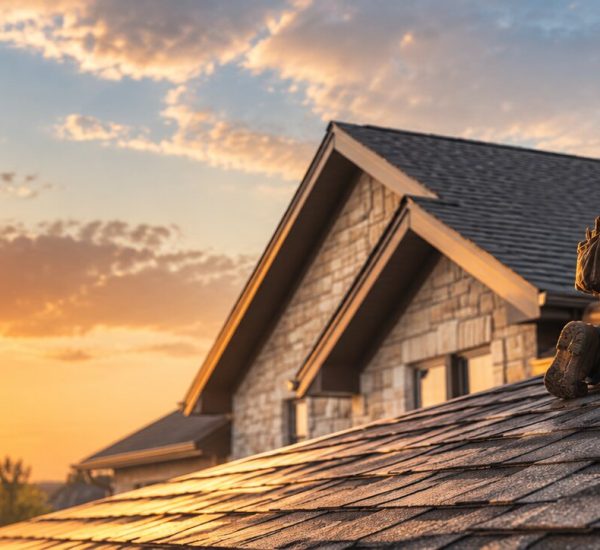

What We Install On
Room additions are the most common. A new section tying into an existing roof needs care, because the connection between old and new is where leaks occur if the flashing is rushed. Matching the existing shingle is usually possible on a roof under about eight years old and honestly difficult beyond that, and we will tell you which situation you are in before you commit.
Detached garages, workshops, and shops are simpler roofs with fewer penetrations, and they are often where a homeowner is willing to consider metal panels because the look matters less and the lifespan matters more.
New construction, whether you are a homeowner acting as your own general or a builder running several lots. We review the plan set before quoting rather than pricing off a square-foot number, because pitch, penetration count, and valley geometry move the price far more than area does.
We check the deck before anything goes down. Wrong sheathing thickness for the rafter spacing, missing clips, or fasteners that missed framing are all things we would rather catch on day one than discover through a callback.
How We Work With Your Schedule
Tell us the framing inspection date, not the date you would like the roof finished. We work backward from it. Material has to be ordered, and after a hail event, lead times in this market stretch, which is the single most common reason a dry-in date slips.
Our permit partners handle permits and inspections for the roofing scope. On a full new build, your general contractor is usually pulling the primary permit, so tell us which arrangement applies, and we will fit into it rather than duplicating paperwork.
Material options are worth settling early, because that decision drives the order and the order drives the schedule. Architectural asphalt is the default, impact-rated is worth considering in a hail market, and metal is more common on outbuildings than on the main house. What it runs depends on all of that.
Where We Work
We install throughout Williamson County and the northern Austin metro from three locations, covering Cedar Park builders along with homeowners adding on.
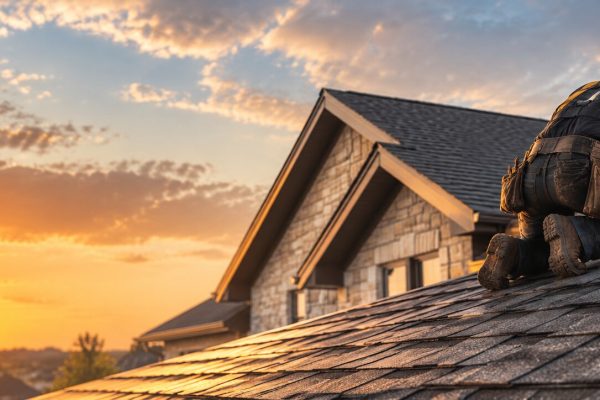
Round Rock builders are handled from the Round Rock listing, which is the closer base for anything east of the county line.

Austin new builds run from the Balcones Club Drive location. Georgetown, Leander, and the communities in between are all within range, and we list every area we work in on the homepage.
Fourteen years in this market, fully insured, and thirty-eight reviews across our three listings. If something goes wrong later, we also handle repair work on roofs we installed, which is a shorter conversation than it is with a contractor who has moved on.
If you want to know who you’ll be working with before you commit, there’s more below. Otherwise, send us the plans, and we will quote from them.
Frequently Asked Questions
How much does roof installation cost on a new build?
Pitch, penetration count, valley geometry, and material drive it far more than square footage does. A simple gable on a detached garage and a cut-up roof on a custom home are different jobs at the same area. We quote from the plan set rather than off a per-square number, so send drawings if you have them.
Is installing a roof cheaper than replacing one?
Somewhat, because there is no tear-off labor and no disposal. Not proportionally, because the work that takes skill is identical: flashing, valleys, edge detail, and ventilation. Expect a modest difference, not a dramatic one.
When should I book the roofer on a new build?
As soon as you have a framing inspection date, and earlier if you want a specific material. The roof is usually what dries the structure in, so it gates the trades behind it. Material lead times are the usual cause of a slipped dry-in, particularly in spring after hail.
Can you match my existing roof on an addition?
Often, if the existing roof is under about eight years old. Beyond that, shingles have weathered, and a new section will read as newer even with the correct product code. We will show you the difference honestly rather than promise a match we cannot deliver.
Do you work with builders or only homeowners?
Both. Homeowners adding on are most of this work, and we also work with builders running new construction. The coordination differs more than the roofing does, and either way we would rather have the framing date than a target completion date.
Who pulls the permit on new construction?
On a full new build, the general contractor normally carries the primary permit, and our scope sits inside it. On a homeowner-managed addition, our permit partners handle the roofing side. Tell us which applies, and we will fit the arrangement rather than duplicate it.
What if the decking is not right when you arrive?
We say so before we start rather than roofing over it. Wrong sheathing thickness for the rafter spacing, missed fasteners, or absent clips all shorten the life of whatever goes on top. Fixing it costs less on day one than a callback in three years.